
The People I Used to Walk Past
In his early years in San Francisco, Mike Edwards saw unhoused neighbors as a public problem. A Labor Day spent grilling with them in Golden Gate Park began a reorientation. This article traces the two relationships every San Franciscan is already building and argues that in a post-Christian city, spiritual formation often runs horizontally before it runs vertically.
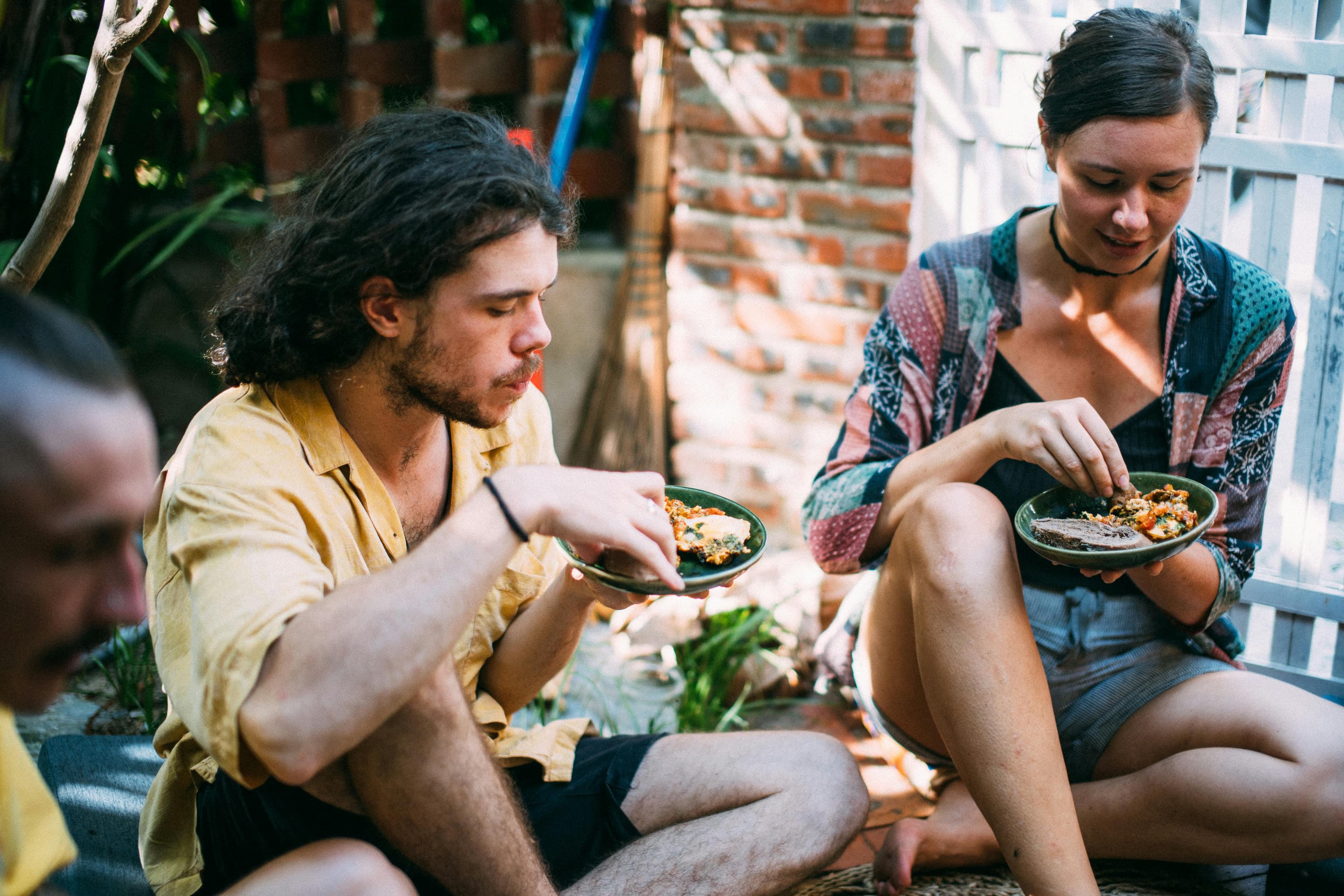
Last Labor Day I spent the afternoon in Golden Gate Park grilling hamburgers and hot dogs with friends. Most of those friends live in the park.
We ate too much. We laughed. There was a real sense of community, the kind you cannot manufacture. Christians and non-Christians around the grill, nobody trying to pull anybody toward anywhere.
When I first moved to San Francisco, I would not have been there.
In my early years in the city, I saw unhoused people as a public problem. That was possible because they were nameless. You can walk past a statistic. You cannot walk past someone you have eaten with.
Something had to change in me for that Labor Day to exist. And the change was not what I expected.
For most of my life I assumed faith was basically vertical work. More prayer. Deeper relationship with God. Love of God comes first, love of neighbor follows.
In San Francisco I am no longer sure it works that way.
Two relationships, not one
I have been walking this city long enough now to notice something about the people in it. They are all, without exception, already in motion on two different relationships. Relationship with something larger than themselves. And relationship with the people around them.
Not every San Franciscan would describe it that way. Most would not. But if you watch closely, the movement is there.
I think about people I have had the privilege of walking alongside in the last few years. The woman who runs a nonprofit and gives everything she has for the people her organization serves, and who would tell you on the record that she is not religious and does not plan to be. The tech founder who has built a daily meditation practice, reads serious books about consciousness, and is still trying to figure out how to be a friend. The twenty-something who grew up in church, left, and is now building from scratch what she actually believes, while also being the person her friends call when their lives blow up.
None of them are in the same place. None of them are following the same path. But they are all moving.
Draw a cross. The vertical axis is a person's relationship with something larger than themselves, running from indifferent at the bottom to personal and reverent at the top. The horizontal axis is their relationship with other people, running from self-centered on the left to other-centered on the right.
Four positions.
In the bottom-left, the self is the center and there is no spiritual frame. I used to live here. The unhoused were nameless to me. So was most of the city, honestly.
In the bottom-right, other people matter and the spiritual frame does not. This is the woman with the nonprofit. This is most of this city's civic life. Generous, real, and eventually exhausted.
In the top-left, the spiritual life is serious but aimed inward. This is the tech founder with the meditation practice. Deep work, done mostly alone.
In the top-right, both relationships are alive. Connection to something larger pours out as real care for the people in front of you, and the care is fed by the connection itself. This is the rarest corner of San Francisco. It is also what I believe most people I know are quietly reaching for, even the ones who would never put it that way.
The horizontal came first
What changed for me was not vertical. It was horizontal.
I had been told, and I believed, that love of God comes first and love of neighbor is the overflow. In my own life that sequence did not hold. I had to be near actual specific named people before my love of God stopped being a private project and became something I had to walk out in the open.
The hot dogs in the park did not fix my theology. They reorganized my life. And from that reorganization, something about my relationship with God changed too. Not because I set out to deepen it. Because I could not keep calling it love if it cost me nothing in the direction of people.
Vertical formation did not pull me toward my unhoused neighbors. My unhoused neighbors pulled me toward vertical formation.
Moving, not arriving
Some people I know are moving up before they move right. Some are moving right before they move up. Some have been circling the same corner for years. Some reach the top-right for a season and then slip. The movement is rarely linear. The direction, when you watch long enough, usually is.
What I know now, which I did not know ten years ago, is that every person I meet in this city is already in motion. Already reaching. Already partway somewhere. My job is not to correct the direction. My job is not even, really, to point it out.
My job is to walk with them the way I wish someone had walked with me, back when the people in the park were still nameless and the thing I called my faith had never once cost me a meal.
Discussion